


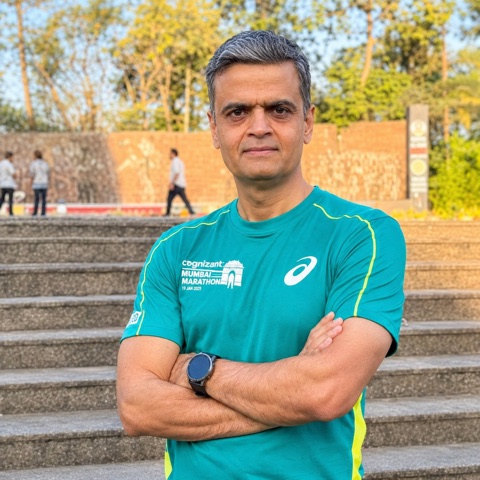
The Tata Mumbai Marathon 2027 is on Sunday, 17 January 2027. From the third week of November, that leaves about eight weeks. The base and most of the hard work should already be done. What happens now decides whether your athletes reach the start line fit and fresh, or tired and carrying a niggle.
This guide is for coaches with a group running the full or half marathon. It covers what each of the last eight weeks is for, how to adjust paces for Mumbai's warm, humid mornings, how to taper, and what to agree with each athlete before race day.
Where your athletes should be now
By mid-November, a marathoner aiming to finish strongly will usually have:
- Several weeks at their highest regular weekly distance.
- At least one long run of 28–30 km.
- Recent sessions at goal marathon pace, so the pace feels familiar.
If an athlete is well short of this, the honest call is a more modest goal, or the half marathon instead. Eight weeks isn't enough to build a base and peak as well. Trying usually ends in an injury in early January.
The last 8 weeks, week by week
Counting back from race day, with the weeks starting on Monday:
| Week starting | Weeks to go | Focus | Long run |
|---|---|---|---|
| 23 Nov | 8 | Peak training | 28–30 km, last 8–10 km at marathon pace |
| 30 Nov | 7 | Peak training | 24–26 km easy |
| 7 Dec | 6 | Recovery week (about 70% of distance) | 18–20 km easy |
| 14 Dec | 5 | Peak training | 30–32 km, the longest run of the block |
| 21 Dec | 4 | Peak training | 24–26 km with 2 × 6 km at marathon pace |
| 28 Dec | 3 | Taper starts (about 80%) | 24–28 km, the last long run |
| 4 Jan | 2 | Taper (about 60–65%) | 16–18 km with 6–8 km at marathon pace |
| 11 Jan | 1 | Race week (about 40% before race day) | Race on Sunday 17 Jan |
Treat these as a shape, not a prescription. A first-time marathoner on 40 km a week and a sub-3 runner on 90 km a week follow the same rhythm with very different numbers.
Two things are deliberate:
- The recovery week in the middle. Most athletes absorb training better with an easier week every third or fourth week. Without one, the peak weeks turn into a grind.
- The longest run is four to five weeks out. That leaves enough time to recover from it and still benefit before the taper.
The weekday sessions
Alongside the long run, two quality sessions a week are enough for most athletes:
- Marathon-pace work: for example 3 × 5 km at goal pace with 1 km easy between.
- Threshold work: for example 5 × 1.5 km at about half-marathon pace with 90 seconds' jog.
Everything else should be easy. If an athlete's easy runs creep into a hard effort, their heart rate shows it. Our guide to heart rate zones explains how to set zones so "easy" means the same thing for everyone in the group.
Pacing for Mumbai's heat and humidity
January is the coolest month in Mumbai, but race mornings are still warm and humid compared with the cities where most marathon pace charts were made. Warm, humid air makes the same pace cost more: more of the body's effort goes into cooling, heart rate drifts up, and sweat losses add up over three to five hours.
What this means for your plan:
- Train the effort, not just the pace. On humid mornings, give easy runs a heart-rate cap rather than a pace. Athletes learn what goal effort feels like when it's sticky.
- Set the race pace from recent sessions in similar weather. A goal set from a cool-weather half marathon will be too ambitious.
- Plan a conservative first half. Starting 5–10 seconds per km slower than goal pace costs little. A first half that's too fast in humid air usually costs minutes after 30 km.
- Practise drinking on the move. Use long runs to rehearse when and how much each athlete drinks and takes gels, at the same times they'll do it on race day.
If you coach athletes on heart rate, our free heart rate zone calculator works out zones three ways. The pace calculator turns a recent race into training paces and a realistic marathon prediction.
The course: what to rehearse
The marathon starts and finishes in south Mumbai and crosses the Bandra–Worli Sea Link. Two things are worth preparing for:
- The climbs. The Sea Link and the road climbs in the second half come when legs are tired. Include some rolling routes or flyover repeats in the long runs of weeks 5 and 4, so a climb at 35 km isn't a surprise.
- An early start. Elite and full marathon starts are early in the morning. Rehearse at least two long runs at race time, with the same breakfast, so stomachs and routines are tested.
Start times and the exact route are published on the official race website before the race. Check them there; they can change from year to year.
The taper: less running, same intensity
The taper is where athletes most often lose their nerve. It feels as if fitness is slipping away. It isn't: two to three weeks of less running lets the body recover from the peak weeks while fitness stays.
- Cut distance, not intensity. Keep short sessions at marathon pace and a little faster, but with fewer reps.
- Keep the routine. Run on the usual days. Dropping whole days often leaves athletes feeling flat.
- No new things. No new shoes, gels, strength exercises or races in the last two weeks.
- Sleep and food matter more than extra kilometres. In the last two or three days, more carbohydrate and a little less fibre suits most runners. Athletes with medical conditions should follow their doctor's advice.
Race week checklist for coaches
Agree these with each athlete before Friday:
- Goal pace and a back-up plan. For example: "5:40 per km to 30 km, then hold or push", and "if it's hotter than expected, 5:50 and finish strong."
- Drinks and gels. What, when, and whether they carry their own or use the course stations.
- Kit. Shoes and kit already worn on a long run; nothing new on race day.
- Getting there. How they'll reach the start that early, where they'll meet the group, and where to find you after the finish.
- When to stop. Chest pain, dizziness or confusion means stopping and asking the medical team for help. No finish time is worth more.
After the race
Plan the first two weeks after the marathon too: a few days off running, then easy runs only. The next block starts from a rested athlete, not one still sore from January.
Plan the block in Athelista
With Athelista you can set the Tata Mumbai Marathon as each athlete's goal race and lay out the last blocks back from race day: peak, recovery week and taper. You can then send each week's runs to their Garmin watch with their own paces and heart-rate zones. When the runs come back, you see each long run and session against the plan, and spot early who is overreaching.
- Send structured workouts to your athletes' Garmin watches
- How to pace interval sessions and read every rep
- Training blocks: laying out a season back from race day
Coaching a group for Mumbai? Start free with up to 3 athletes, or send us your plan and we'll help you move it in.